
About
This work isn't about making people careful. It's about making them strong.
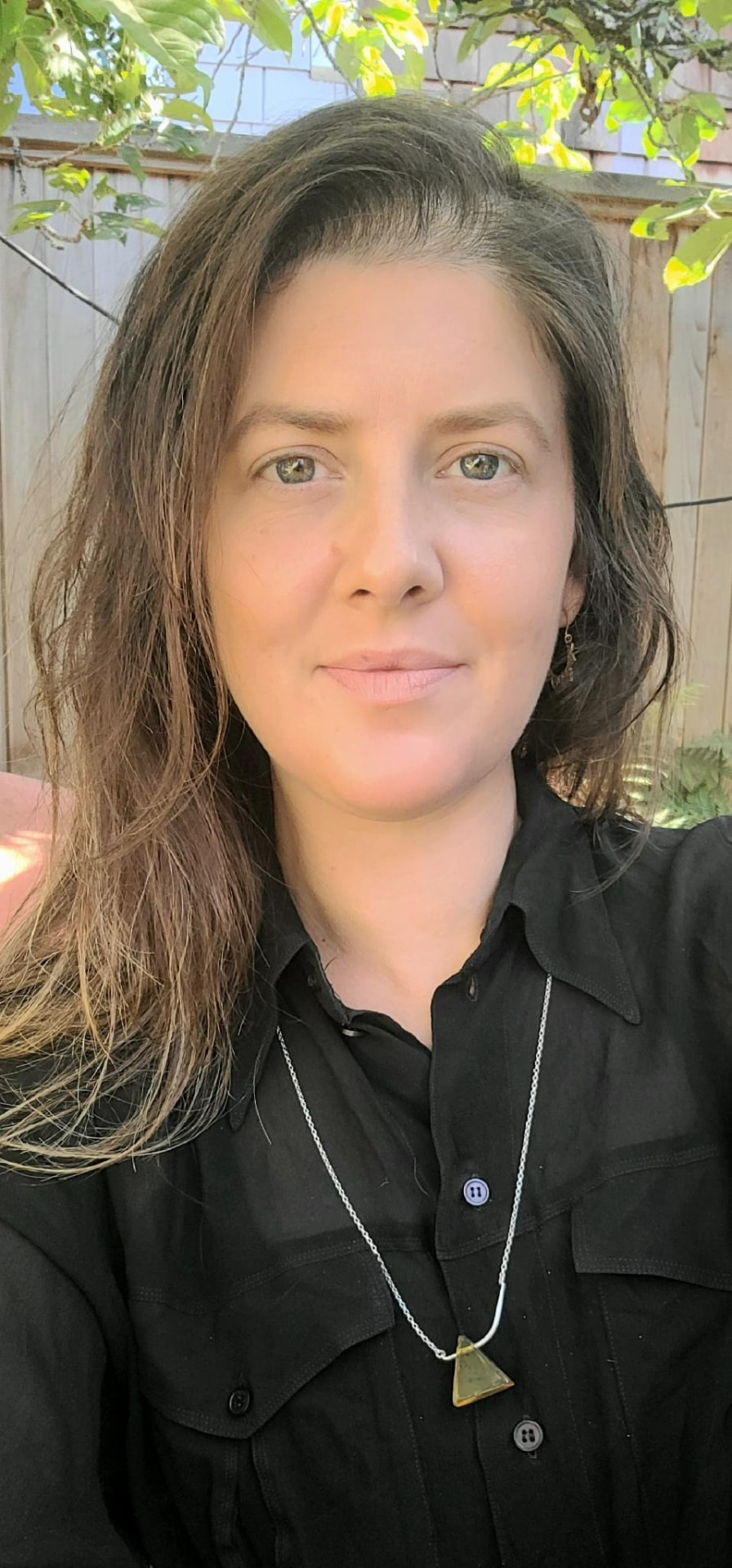
Your coach, Andrea Kruger, is a Certified Athletic Therapist - CAT(C) and a licensed ONERO® instructor in the Comox Valley, with over 15 years in exercise rehabilitation and evidence-based fitness program coordination. ONERO® — the bone-specific strength class at the core of Strong Bones Blueprint — was developed out of university research into what actually improves bone density and lowers fracture risk.
- Bachelor of Athletic and Exercise Therapy — Camosun College
- Certified Athletic Therapist, CAT(C) — Canadian Athletic Therapy Association
- Licensed ONERO® Instructor — certified through the ONERO® VIP Academy
- Dynamic Neuromuscular Stabilization Exercise Trainer (DNSET) — Prague School of Rehabilitation
- Certified Personal Trainer, CSEP-CPT — Canadian Society for Exercise Physiology
Almost everyone who walks into the studio has the same story. A scan came back. Someone used the word osteoporosis. They were told to take their calcium, walk a bit, and not lift anything heavy. And then they went home and quietly started shrinking their life.
That's unacceptable, because the research says something different. Bone responds to being loaded. Not gently. Properly. And it can be done safely when somebody who knows what they're doing is standing right there with you.
That's the whole job. The load is set for you, every rep is watched, and you get the truth about your progress.
This program works with motivated and committed individuals who are ready to improve their bone density and invest in their health.
If you're reading this, a few things are probably true.
You got a bone density result you didn't expect, and nobody really explained what to do next.
You were told to walk more, take your calcium, and be careful. That's the whole plan.
You've quietly started avoiding things — icy sidewalks, the top shelf, the grandkids' rough-housing.
You'd happily work hard for your bones. You just don't want to hurt yourself doing it.
You're not just scared. You're also motivated, curious, and looking for real guidance and clarity — not just another list of things to avoid.
The reframe
Being careful and being safe are not the same thing.
Avoiding movement because you're afraid of what it might do to your bones feels like protection. It isn't. Every activity you drop takes a little strength, a little balance, and a little confidence with it — and those three things are what actually keep you off the floor.
Bone is not a set of brittle sticks you were issued at birth. It's living tissue that rebuilds itself in response to load. Ask nothing of it and it quietly gives ground. Ask well, and it answers.
This isn't just about lifespan, simply adding more years. It's about healthspan — adding more life to those years, the ability to keep doing the things you love for as long as you're alive to do them.
So the goal here isn't to handle you gently. It's to make you strong enough that life doesn't have to.
What makes Strong Bones Blueprint different from a general fitness class
Four things, and all four have to be there. Take one out and the class becomes a nice workout that your bones will politely ignore.
Load that bone can hear
Light weights are lovely for a lot of things. Bone isn't one of them. This training uses progressively heavier resistance because that's the signal your skeleton actually responds to.
Impact, introduced honestly
A small, controlled amount of loading through the hip. We start where you are and add only when your body has earned it. Nothing gets sprung on you.
Balance as fracture prevention
Most fractures need a fall first. So we train the reactions that turn a wobble into a non-event.
Supervision, every single session
You're never handed a card and left alone in a corner. Your instructor sets the weight, watches the movement, and adjusts in real time.
What your first few weeks look like
The pre-evaluation form, before anything else
You watch the video on the home page and send the form. It's read, and if Strong Bones Blueprint looks right for you, your instructor gets in touch. No commitment attached to this.
A conversation, then a proper evaluation
You and your instructor talk through your results, history and medications. Then your instructor checks how you move, where you're strong, where you're guarding, and how your balance holds up. If clearance from your provider is needed first, you'll be told.
Technique before weight
The first weeks are about technique, not weight. Most people are surprised by how unintimidating the beginning is.
Then we build, patiently
Load goes up as your confidence and control go up. You'll be able to see the progression written down, week after week.